RWA Token Compliance: Legal Frameworks That Protect Your Launch
RWA token compliance requires securities law adherence, AML/KYC implementation, and jurisdiction-specific structures. Here's how to build tokens that hold up under regulatory scrutiny.


RWA token compliance means adhering to securities laws, implementing AML/KYC requirements, and structuring legal entities to ensure tokenized real-world assets remain legally enforceable. Most RWA tokens representing ownership in real estate, bonds, or equity are classified as securities, triggering registration requirements and investor protections across multiple jurisdictions.
The regulatory environment isn't getting more lenient. Projects that treat compliance as an afterthought set themselves up for frozen fundraising, enforcement actions, and destroyed market cap.
This isn't theoretical risk. Securities represent a global market exceeding 100 trillion dollars that can be tokenized (ERC3643 Association). That scale brings regulatory scrutiny at every level.
#Why RWA Tokens Trigger Securities Law
"Not all tokens are securities, but in the context of RWA, many such tokens, especially those providing rights to share in profits or income, are likely to be treated as securities." — Hester Peirce, Commissioner, U.S. Securities and Exchange Commission (Buzko Legal)
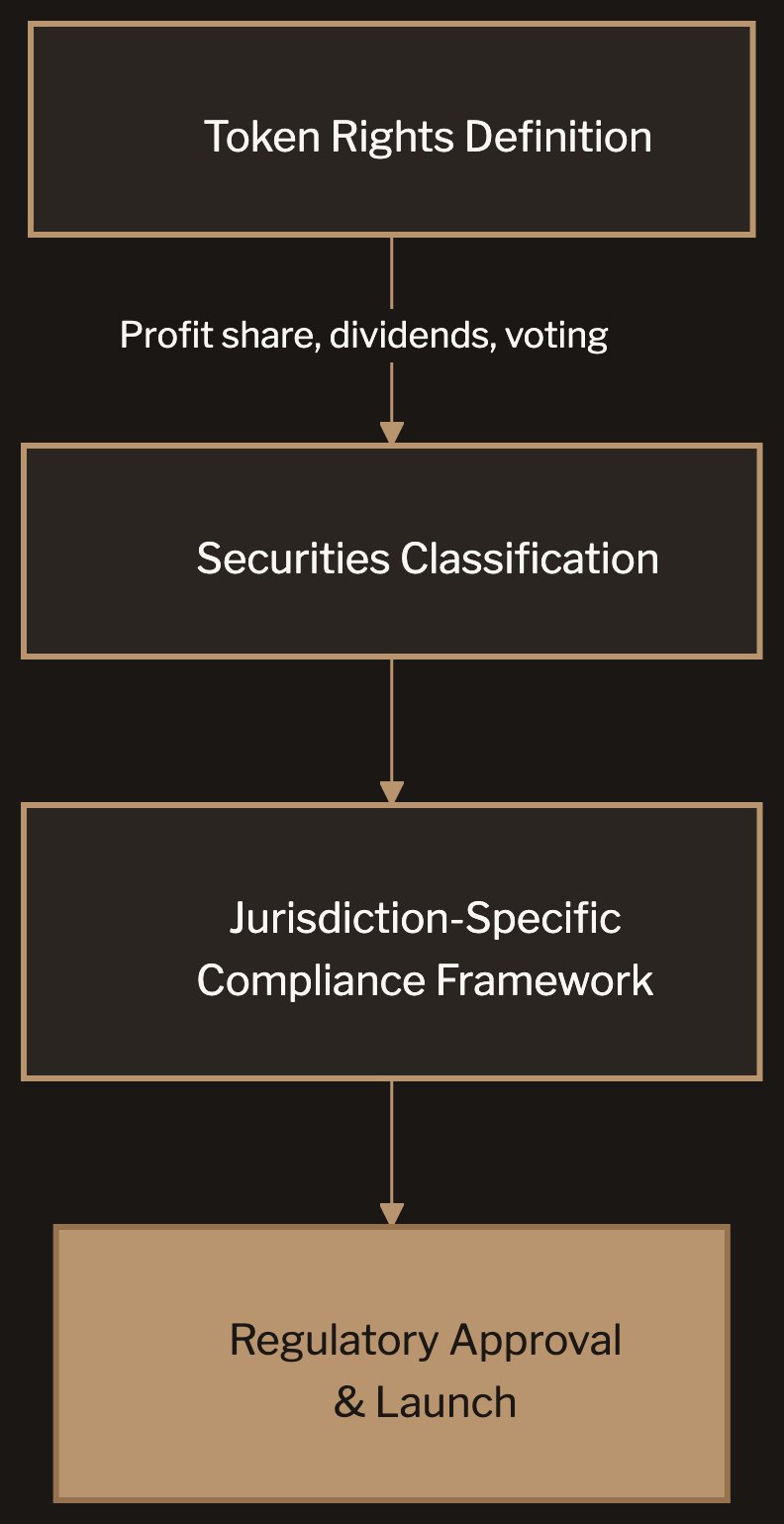
RWA tokens are often classified as securities under regulations throughout their lifecycle, subjecting issuers, platforms, and custodians to investor protection rules (InvestaX). If your token provides ownership rights, profit sharing, dividends, or voting power tied to an underlying asset, you're operating in securities territory.
This classification determines everything downstream. Legal structure. Token standards. Investor eligibility. Transfer restrictions. Custody requirements. Disclosure obligations.
The compliance framework you choose shapes whether your token can legally operate in target markets. Get it wrong and you're launching a product you can't legally sell.
#Token Standards That Embed Compliance
You can't bolt compliance onto a token after launch. It needs to be built into the smart contract architecture from day one.
ERC-3643 and ERC-1400 are the primary standards for compliant security tokens. They embed KYC/AML checks, transfer restrictions, and investor eligibility verification directly into the token contract.
The ERC3643 protocol enables permissioned tokens with built-in compliance via ONCHAINID, ensuring transfers only occur when investor and offering rules are met at the smart contract level (ERC3643 Association). Every transfer triggers a compliance check. If the recipient isn't verified, the transaction fails.
This solves the enforcement problem. You're not relying on off-chain processes to prevent illegal transfers. The token itself enforces the rules.
On-chain transfer restrictions use allowlists and gated hooks to ensure tokens transfer only to eligible investors compliant with securities laws (Growth Turbine). Smart contracts check identity registries, verify accreditation status, and enforce lock-up periods automatically.
For more detail on how these standards work, see our breakdown of ERC-3643: The Standard for Compliant Security Tokens and ERC-1400: Security Token Standard for Regulated Assets.
#Jurisdiction-Specific Requirements
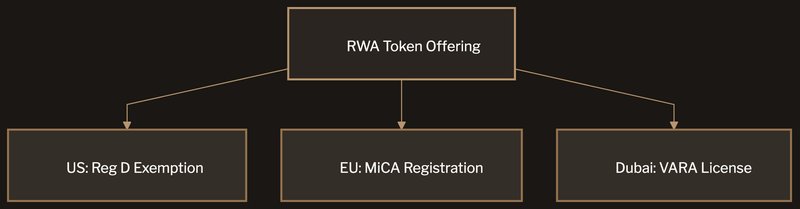
Compliance isn't universal. What works in Delaware doesn't work in Dubai. What satisfies MiCA won't satisfy VARA.
#United States: Reg D and Broker-Dealer Rules
Most US RWA issuers structure offerings under Regulation D exemptions to avoid full SEC registration. Reg D limits sales to accredited investors and restricts general solicitation.
If you're operating a platform that facilitates secondary trading, you may need a broker-dealer license or ATS registration. If you're converting fiat to tokens, money transmission laws apply.
Token rights matter. If your token provides dividends or profit sharing without active investor participation, you risk classification as an unregistered investment company under the Investment Company Act of 1940.
#European Union: MiCA Framework
Under MiCA, issuers of asset-referenced tokens must publish white papers, register with regulators, and meet capital requirements to honor redemptions (Buzko Legal). The framework applies across all EU member states, creating regulatory consistency but adding compliance overhead.
MiCA distinguishes between asset-referenced tokens, e-money tokens, and utility tokens. Classification determines which requirements apply. Get it wrong and you're operating without authorization.
#Dubai: VARA Licensing
Dubai mandates VARA licenses and audits for RWA token issuers. Specifically, a Category 1 license, white paper submission, financial audits, and minimum paid-up capital are required (Safeheron).
VARA's framework is comprehensive. It covers issuance, custody, trading, and advisory services. If you're touching RWA tokens in Dubai, you're in scope.
#Legal Structure and Entity Design
Your token needs a legal wrapper. The entity structure determines liability, tax treatment, and regulatory obligations.
Common structures include special purpose vehicles, limited partnerships, and trusts. The choice depends on asset type, investor base, and target jurisdictions.
Issuers need to establish legal structures, obtain licenses such as custodian or fund management credentials, and define token rights like dividends or voting to avoid unregistered investment company status. If you're pooling investor funds and actively managing them, you're likely operating as an investment company.
Custody is another critical piece. Who holds the underlying asset? How is ownership verified? What happens if the custodian fails? These questions need answers before you launch.
For real estate tokenization specifically, see our guide on Real Estate Tokenomics: Designing Property Tokens for structure considerations.
#AML/KYC Implementation
Know Your Customer and Anti-Money Laundering programs aren't optional for RWA tokens. They're table stakes.
Platforms handling RWA tokens must implement AML/KYC programs and may trigger money transmission laws if converting fiat to tokens. This means customer identification, transaction monitoring, suspicious activity reporting, and sanctions screening.
The Compliance Integration Framework requires identity verification before token purchase, ongoing monitoring of transfer activity, and automated flagging of suspicious patterns. Smart contracts can enforce this through identity registries that link wallet addresses to verified identities.
ONCHAINID is one solution. It creates a decentralized identity layer that stores compliance credentials on-chain. Token contracts query the registry before allowing transfers. If credentials are missing or expired, the transfer fails.
This creates a compliance layer that operates at the protocol level, not just the platform level. Even if tokens move to a non-custodial wallet, the compliance rules travel with them.
#Disclosure and Reporting Obligations
Securities regulation requires ongoing disclosure. You can't issue a token and disappear.
Issuers must provide offering documents, financial statements, asset valuations, and material event notifications. The frequency and format depend on jurisdiction and offering type.
Under MiCA, asset-referenced tokens require published white papers with detailed disclosures about reserve assets, redemption mechanisms, and risk factors. US Reg D offerings require Form D filings and may trigger ongoing reporting under Rule 506(c).
Investors need access to information that affects token value. Asset performance. Management changes. Legal disputes. Regulatory actions. All of it needs disclosure.
For projects raising capital, this information belongs in a structured data room. Our Tokenomics Data Room Checklist covers what institutional investors expect to see before committing capital.
#Smart Contract Compliance Features
Compliance needs to be enforceable at the code level. Manual processes don't scale and create enforcement gaps.
Smart contracts enable automated compliance via allowlists, beacon registries, and metadata for ownership restrictions, bridging blockchain with off-chain legal structures. The contract becomes the enforcement mechanism.
Key features include:
Transfer restrictions: Tokens can only move to addresses on an approved list. The contract checks eligibility before executing transfers.
Lock-up periods: Vesting schedules and holding periods are enforced by the contract. Tokens can't be transferred until the time lock expires.
Investor limits: Reg D and other exemptions cap investor numbers. Smart contracts can enforce these limits by tracking unique holders.
Jurisdiction blocking: Contracts can block transfers to wallets in prohibited jurisdictions by checking IP data or requiring jurisdiction attestation.
These features turn regulatory requirements into code. The blockchain enforces compliance automatically, without relying on manual oversight.
Our article on Token Standards Explained provides broader context on how different standards approach these problems.
#Building a Compliance-First Data Room
Investors, auditors, and regulators need documentation that proves compliance. A tokenomics data room organizes this evidence in one place.
For RWA tokens, your data room should include:
Legal opinions: Securities law analysis, jurisdiction-specific compliance memos, entity structure documentation.
Token contracts: Audited smart contracts with compliance features clearly documented. Audit reports from reputable firms.
KYC/AML procedures: Written policies, vendor agreements, and evidence of implementation.
Financial models: Projections that account for compliance costs, legal fees, and ongoing reporting obligations. Monte Carlo simulation helps stress-test these models under different regulatory scenarios.
Offering documents: White papers, private placement memoranda, subscription agreements, and investor disclosures.
Licenses and registrations: Evidence of regulatory approvals, exemption filings, and ongoing compliance.
This isn't busywork. It's the foundation that lets you operate legally and protects you when regulators come asking questions.
Why Investors Demand Tokenomics Data Rooms in 2026 explains why institutional capital won't move without this level of documentation.
#Common Compliance Failures
We've seen projects fail compliance in predictable ways. Here's what kills launches:
Treating compliance as a post-launch task. You can't retrofit compliance onto a token that's already trading. The architecture needs to support it from day one.
Ignoring jurisdiction-specific rules. A token structured for US investors won't work in the EU. A MiCA-compliant token won't satisfy VARA. You need structures that match your target markets.
Weak KYC/AML implementation. Using a low-quality KYC provider or skipping verification steps creates enforcement risk and opens the door to sanctions violations.
Incomplete disclosure. Investors need material information. Hiding risks, overstating asset values, or failing to disclose conflicts of interest creates liability.
Poor entity structure. Using a structure that doesn't match your token's economic reality creates tax problems, regulatory gaps, and investor confusion.
These aren't edge cases. They're the most common ways RWA projects create legal exposure.
#Case Study: Compliant Real Estate Token Structure
A real estate tokenization project needs multiple compliance layers working together.
The structure starts with a special purpose vehicle that holds title to the property. The SPV issues security tokens representing fractional ownership. Token holders receive pro-rata distributions from rental income and appreciation.
The token uses ERC-3643 with an identity registry. Investors complete KYC verification through a licensed provider. Verified identities are recorded on-chain. The token contract checks the registry before allowing transfers.
The offering is structured under Reg D 506(c), limiting sales to accredited investors. The platform verifies accreditation through income documentation or net worth statements. Only verified investors can purchase tokens.
Transfer restrictions enforce a 12-month lock-up period for US investors. The smart contract blocks transfers until the lock-up expires. After that, transfers are allowed only to other verified, accredited investors.
The issuer files Form D with the SEC and provides ongoing financial reporting to token holders. Annual property valuations, rental income statements, and expense reports are published in the investor portal.
This structure satisfies securities law, implements enforceable restrictions, and provides transparency to investors. It's not simple, but it works.
For more on designing RWA token models, see RWA Tokenomics: Designing Token Models for Real Assets.
#Compliance Costs and Timeline
Building a compliant RWA token isn't cheap or fast. Budget accordingly.
Legal structuring typically costs $50K-$150K depending on jurisdiction and complexity. This includes entity formation, securities law analysis, offering documents, and compliance policies.
Smart contract development with compliance features adds another $30K-$80K. Audits from reputable firms cost $15K-$40K per contract.
KYC/AML implementation requires vendor contracts, integration work, and ongoing per-user costs. Expect $10K-$30K for setup plus $5-$20 per verified user.
Regulatory filings, licenses, and registrations vary widely. US Reg D filings are relatively inexpensive. VARA licenses in Dubai require substantial capital and ongoing fees. MiCA registration in the EU involves legal fees, capital requirements, and compliance infrastructure.
Timeline from design to compliant launch typically runs 4-6 months for straightforward structures, longer for complex multi-jurisdiction offerings.
These costs are the price of operating legally. Skipping them doesn't save money. It creates risk that destroys value when regulators intervene.
#Get Your Compliance House in Order
RWA token compliance isn't a checklist you complete once. It's an ongoing operational requirement that shapes every aspect of your token's design, issuance, and lifecycle.
The projects that succeed are the ones that build compliance into the foundation. They choose token standards that enforce restrictions. They structure entities that match their economic reality. They implement KYC/AML programs that actually work. They provide disclosure that satisfies regulators and protects investors.
The projects that fail treat compliance as an afterthought. They launch first and ask permission later. They use token standards that can't enforce restrictions. They skip legal opinions and hope regulators don't notice.
The regulatory environment is getting more serious, not less. Projects that get this right have a competitive advantage. Projects that don't are building on unstable ground.
If you're building onchain and need your tokenomics to hold up under scrutiny, book a discovery call. We'll assess your project and tell you whether we're the right fit. Sometimes we're not. We'll tell you that too.