Why Investors Demand Tokenomics Data Rooms in 2026
Investors demand tokenomics data rooms because transparency, risk assessment, and regulatory compliance became non-negotiable after 2024's enforcement wave.


Investors demand tokenomics data rooms in 2026 because regulatory enforcement intensified, institutional capital entered the market, and transparency became the price of entry. After years of collapses driven by opaque allocations and hidden unlock schedules, sophisticated investors refuse to commit capital without seeing the complete picture. The whitepaper era is over. Now they want the data room.
The shift happened fast. Two years ago, a well-designed whitepaper and a pitch deck could close a round. Today, that same pitch gets you a list of questions: Where's your financial model? What's your Monte Carlo stress test show? Who reviewed your legal structure? When do team tokens unlock, and how much?
If you can't answer those questions with documentation, the conversation ends.
#The Regulatory Environment Changed Everything
The 2024 enforcement wave forced the industry to grow up. Projects that treated compliance as an afterthought found themselves in regulatory crosshairs. Investors who backed those projects learned expensive lessons about due diligence.
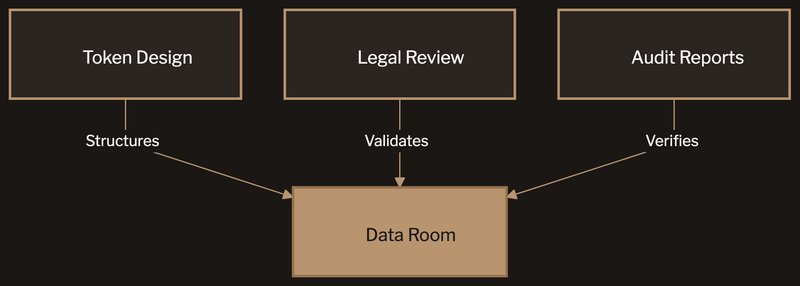
Now they demand proof. Legal opinions on token classification. Audit reports on smart contract security. Compliance documentation showing you understand the jurisdictions you're operating in. A whitepaper that says "utility token" doesn't cut it anymore.
According to Arkham Intelligence research, team and investor allocations are often vested over multiple years to align with long-term value, representing overhanging sell pressure on unlocks. Investors know this. They want to see exactly when those unlocks happen and how much pressure hits the market.
The projects that survive regulatory scrutiny are the ones that built their house in order from day one. That means documentation that holds up under review.
#Institutional Capital Demands Institutional Standards
Retail investors might have been satisfied with hype and promises. Institutional investors are not. They have fiduciary duties. They have compliance teams. They have investment committees that need to see real numbers.
When a fund writes a seven-figure check, they're not betting on vibes. They're analyzing supply dynamics, revenue projections, and market cap sustainability. They're running scenarios: What happens if adoption is slower than projected? What if market conditions turn? How does the token hold value under stress?
Those questions require answers backed by models. Financial projections with assumptions clearly stated. Monte Carlo simulation results showing probability distributions across different scenarios. Sensitivity analysis on key variables. Revenue-first design that demonstrates how the business actually makes money.
CoW DAO's comprehensive tokenomics guide explains that whitepapers must detail token allocation percentages for team, investors, and community with vesting schedules, incentive models, and risk mitigations. Institutional investors expect this level of detail as baseline, not bonus.
The gap between what retail expects and what institutions require is massive. Projects that can't bridge that gap don't get institutional backing.
#Distribution Determines Destiny
You can have brilliant mechanism design. If your distribution is broken, your token is dead. Investors know this. They've seen too many projects with clever incentive structures collapse because allocations were mismanaged.
Pre-mined tokens sold to early investors like VCs fund product building, as seen in ETH, BNB, and SOL projects. That's standard practice. But the details matter: How much went to insiders? What are the vesting terms? When do cliffs end? How much liquidity exists to absorb unlocks?
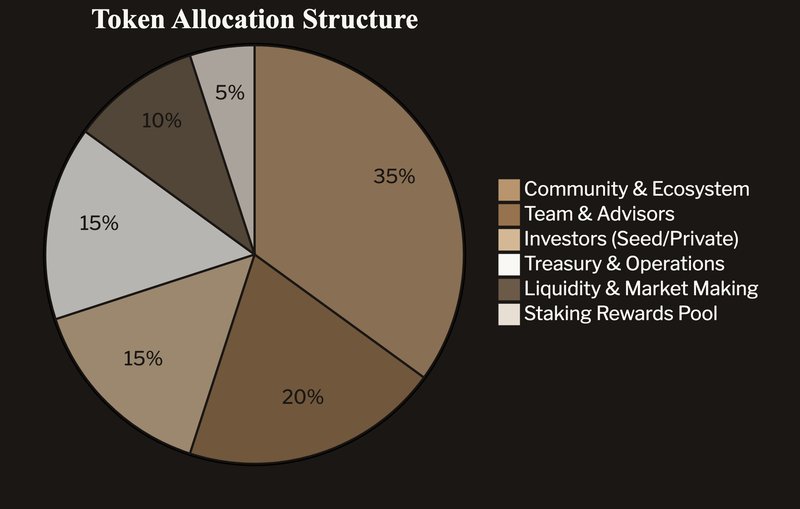
Investors scrutinize allocation structures because they directly impact market cap sustainability. A project with 40% of supply going to a team with a six-month cliff is a ticking time bomb. A project with thoughtful multi-year vesting and staggered unlocks has a fighting chance.
The data room answers these questions with precision. Not vague statements like "team tokens are vested." Exact schedules: X tokens unlock on Y date. Total circulating supply increases by Z%. Expected market impact based on historical volume.
That's the level of transparency investors demand in 2026.
#On-Chain Verification Became Standard Practice
Blockchain is transparent by design. Investors use that to their advantage. They don't just read your documentation — they verify it on-chain.
Tools like Etherscan let anyone check total supply, circulating supply, and top holder concentrations. If your documentation says one thing and the blockchain shows another, you've lost credibility instantly.
Smart investors track wallet movements. They monitor when large holders move tokens. They watch unlock events in real-time. They correlate price movements with supply changes. This level of scrutiny means your tokenomics documentation must match on-chain reality exactly.
The projects that succeed provide clear mapping between documentation and on-chain data. Token contracts are published and verified. Vesting contracts are transparent. Multi-sig wallets for treasury management are public. Every claim in the data room can be verified independently.
This isn't optional anymore. It's baseline expectation for serious projects.
#Revenue Models Must Hold Up Under Scrutiny
A token without sustainable revenue mechanics is a countdown timer. Investors learned this lesson the hard way through multiple cycles. In 2026, they won't invest in projects that can't articulate clear revenue generation.
The Revenue-First Design methodology starts with one question: How does this business actually make money? Not "how does the token accrue value" — that's downstream. The business must generate real revenue that flows to token holders in a sustainable way.
4IRE Labs' tokenomics design guide emphasizes that tokenomics design files must cover token allocation, emissions schedules, unlocking dynamics, and long-term roadmap timelines for investor clarity. Revenue modeling is central to this. Investors want to see:
- Revenue sources clearly identified
- Unit economics that make sense
- Projections with realistic assumptions
- Sensitivity analysis on key variables
- Path to profitability with milestones
Projects that can't demonstrate sustainable revenue don't get funded. The days of "we'll figure out monetization later" are over.
#What Investors Actually Look For
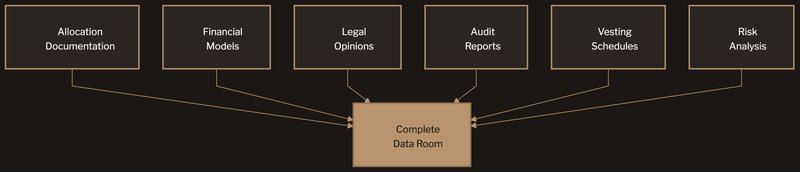
When an investor opens your data room, they're looking for specific artifacts. Missing any of these raises red flags.
Token allocation breakdown: Exact percentages to each stakeholder group. Not ranges — exact numbers. With rationale for why each allocation exists.
Vesting schedules: Specific dates, amounts, and conditions. Cliff periods clearly stated. Unlock calendars showing every future event. Expected circulating supply at each milestone.
Financial models: Multi-year projections with clearly stated assumptions. Revenue forecasts tied to adoption metrics. Cost structures. Burn rate. Path to sustainability. Monte Carlo simulation results showing probability distributions.
Valuation framework: How you arrived at token price. Whether you used discounted cash flow, equation of exchange (MV=PQ), or other methodologies. Comparable analysis if relevant.
Legal opinions: Token classification analysis. Regulatory compliance strategy. Jurisdictional considerations. Securities law assessment.
Audit reports: Smart contract security audits from reputable firms. Penetration testing results. Bug bounty program details if applicable.
Risk disclosures: What could go wrong and how you're mitigating it. Regulatory risk. Technical risk. Market risk. Competitive risk. Honest assessment, not legal boilerplate.
This isn't everything, but it's the core. Missing pieces signal incomplete preparation.
#The Whitepaper vs. Data Room Distinction
Your whitepaper tells the story. Your data room provides the proof. Both matter, but they serve different audiences and purposes.
The whitepaper is public-facing. It explains your vision, technology, market opportunity, and how the token fits into the ecosystem. It's marketing material that needs to be compelling and clear.
The data room is investor-facing. It contains sensitive financial information, detailed allocations, legal analysis, and proprietary modeling. It's due diligence material that needs to be comprehensive and accurate.
Many projects make the mistake of trying to serve both purposes with one document. That doesn't work. Investors need depth that would overwhelm general readers. Community members need accessibility that would feel superficial to institutional investors.
Separate the materials. Let each serve its purpose. The whitepaper generates interest. The data room closes the deal.
Our guide on what a tokenomics data room actually is breaks down this distinction in detail and explains what belongs in each.
#How Transparency Builds Trust
Transparency isn't just about avoiding problems. It's about building confidence. When investors see that you've thought through every detail, documented every assumption, and prepared for scrutiny, they trust you to execute.
Blockworks' investor guide notes that tokenomics docs must disclose release schedules publicly to prevent dumps and track key dates for stakeholders. This transparency prevents surprises that destroy market cap.
Projects that hide information signal risk. Projects that proactively disclose signal professionalism. The difference in fundraising outcomes is dramatic.
We've seen this repeatedly: Two similar projects, similar tech, similar teams. One has a complete data room ready before investor conversations. The other scrambles to answer questions during due diligence. The first closes their round. The second doesn't.
Preparation matters. Documentation matters. Transparency matters.
#What Happens When You Don't Have a Data Room
You get stuck in due diligence hell. Investors ask questions. You scramble to create answers. They ask follow-ups. You realize your initial answer was incomplete. They lose confidence. The deal slows. Eventually it dies.
Or worse: You raise money without proper documentation, and problems surface later. Investors discover allocations that weren't disclosed. Unlock schedules that weren't clear. Legal risks that weren't addressed. Relationships deteriorate. Market cap suffers. Everyone loses.
The projects that succeed are the ones that get their house in order before they go to market. That means building the data room early, not treating it as a fundraising afterthought.
For teams working with real-world assets, the documentation requirements are even more stringent. Our guide to RWA tokenomics design covers the additional considerations for asset-backed tokens.
#The Standard Is Only Getting Higher
What's acceptable in 2026 will be baseline by 2027. Regulatory requirements will tighten. Institutional expectations will rise. Competition for capital will intensify.
The projects that set themselves up for long-term success are the ones investing in institutional-grade documentation now. Not because they have to, but because they understand that credibility compounds.
Every interaction with investors either builds trust or erodes it. Complete documentation builds trust. Missing answers erode it. Over time, that trust gap determines who gets funded and who doesn't.
We've built data rooms for projects across DeFi, RWA, DePIN, and gaming. The pattern is consistent: Teams that treat documentation as infrastructure rather than overhead raise faster, at better terms, with stronger investor relationships.
If you're building something real, your tokenomics documentation should reflect that. Not as a compliance checkbox, but as a competitive advantage.
#Get Your House in Order
The market has spoken. Investors won't commit capital without seeing complete tokenomics documentation. The whitepaper era is over. The data room era is here.
If you're preparing to raise, start building your data room now. Not next month when investors start asking questions. Now, while you have time to do it right.
Our tokenomics data room checklist covers every document investors expect to see. Use it to audit your current state and identify gaps.
For projects tokenizing real estate or other physical assets, our real estate tokenomics guide provides specific guidance on documentation requirements for asset-backed tokens.
The standard is clear. The expectations are high. The projects that meet them are the ones that get funded.
If you're building onchain and need your tokenomics to hold up under institutional scrutiny, book a discovery call. We'll assess your project and tell you whether we're the right fit. Sometimes we're not. We'll tell you that too.
Our tokenomics data room service provides everything investors expect: mechanism design, financial modeling, legal documentation, audit coordination, and launch strategy. Everything in one place, built to institutional standards.
The question isn't whether you need a data room. The question is whether you'll have one ready when investors ask for it.